


The Ray Group tax team is alerting business owners to an important federal tax change affecting employer-provided meals. The change took effect on January 1, 2026. Under the new meal deduction rules for businesses, certain meal expenses are no longer deductible for federal income tax purposes. Previously, many of these expenses qualified for a 50% deduction. As a result, some employee meal programs now cost employers more after taxes.
Employers offering workplace food programs, providing meals, or operating cafeterias should understand which expenses remain deductible. They should also review their meal policies and tax strategies accordingly. State tax treatment may differ because not every state follows federal tax law changes.


Understanding the New Meal Deduction Rules for Businesses
The new meal deductions rules for business change how employers deduct certain meal expenses. Federal tax law previously allowed partial deductions for many employer-provided meals. Common examples include meals during extended shifts and meals for employees required to stay on-site. Employer-operated cafeterias also qualified under previous rules. Through 2025, these meal expenses generally qualified for a 50% federal tax deduction.
What Changed for Employer-Provided Meals?
The new meal deductions rules for business changed the federal tax treatment of certain employer-provided meals. Beginning January 1, 2026, meals provided for the employer’s convenience became non-deductible. Expenses for employer-operated eating facilities also became non-deductible for federal income tax purposes.
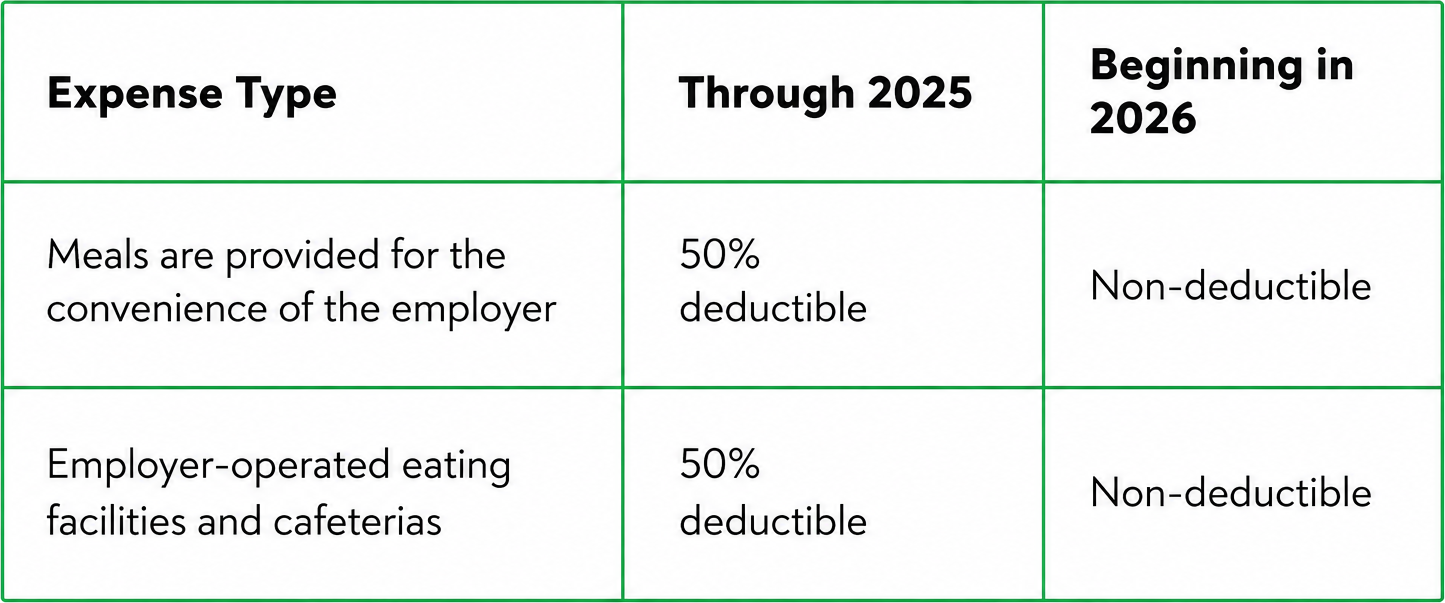
Some workplace food and drink programs may also lose tax deductions if they previously qualified under the employer convenience exception.
Could These Changes Affect Your Business?
Businesses that routinely provide employee meals could see the greatest tax impact. But technology companies, workplace cafeterias, large employers, and medical facilities offering meal benefits may experience higher costs.
Which Meal Costs Still Qualify Under the New Meal Deduction Rules for Businesses?
Not every meal-related expense lost its tax deduction, and several common business meal costs may still qualify.
- Meals with clients or prospects may quality for a 50% deduction when IRS requirements are met.
- Business travel meal expenses generally follow the existing federal tax rules.
- Employee appreciation events may still qualify for a full tax deduction.
- Company picnics, holiday celebrations, and similar staff events often remain fully deductible.
- Meals treated as employee wages or provided for promotional purposes may still receive favorable tax treatment.
It’s worth noting that accurate records help support every deduction and reduce problems during a tax review. This is especially important given that different meal expenses are treated differently for tax purposes.
Tax Planning Tips for Business Owners
Business owners should review how meal expenses are recorded under the new meal deduction rules for businesses. Separate deductible and non-deductible costs in your accounting records.
Updating your bookkeeping can improve tax planning, budgeting, and employee meal policies. It also provides a clearer picture of your actual business expenses. California follows different tax rules than the federal government. Some meal expenses disallowed federally may still qualify for California deductions.
In general, California allows a 50% deduction for certain employer-provided meals. Some qualifying meals that are small and not so meaningful may remain fully deductible. Examples include overtime meals, office coffee, snacks, and similar workplace refreshments. Proper classification helps maximize available tax benefits.
Get in Touch
The updated tax treatment of employer-provided meals may increase business costs. Careful planning can help reduce unexpected tax consequences. The Ray Group can help you understand these changes and identify practical tax strategies. Contact our team for personalized guidance tailored to your business.
You may also enjoy reading: Self-employed tax deductions


Tips vs Service Charges Tax Implications For Californians
Albeit it's been over 7 years since the IRS enforced the Revenue Ruling 2012-18, there's…

Irrevocable Trust: Utilize The Current Tax Exemption Before It Expires
The federal estate tax exemption will expire December 31, 2025. When that happens, the exemption…

Lifetime Estate and Gift Tax Exemption To Sunset In 2025
Whether you give vehicles, cash or stocks to someone, the government may want to collect…

The Benefit Of California Pass-Through Entity Tax
In 2017, the the pass-through entity tax (PTE) was enacted in response to the Tax…