
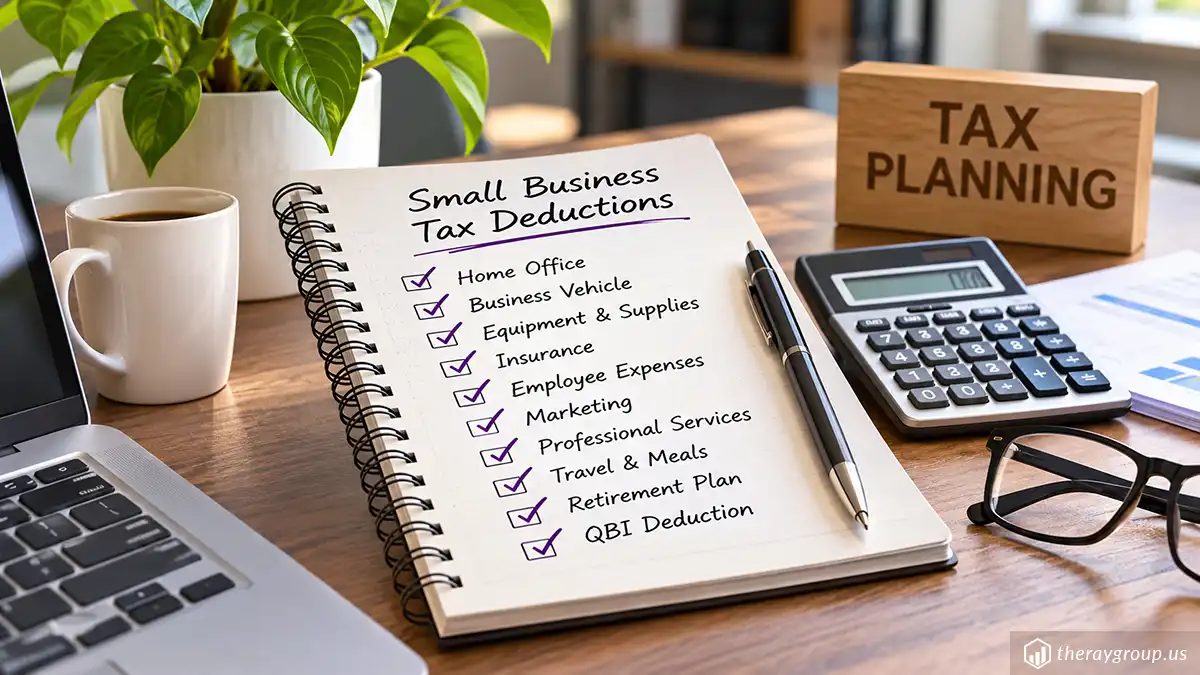

Running a small business comes with plenty of expenses. From office supplies and equipment to employee wages and marketing, the costs can add up quickly. But here’s something many business owners overlook: some of those everyday expenses could actually help lower their tax bill.
Taking advantage of small business tax deductions is one of the smartest ways to keep more of your hard-earned money. However, knowing which expenses qualify and how to claim them correctly isn’t always straightforward.
That’s where working with an experienced CPA can make a difference. Let’s explore 10 valuable tax deductions that could help your business save money.


10 Small Business Tax Deductions You Shouldn’t Overlook
1. Office Expenses
Do you operate your business from home? If so, you may qualify for a home office deduction. Eligible expenses can include a portion of your rent, mortgage interest, utilities, insurance, and home maintenance costs. Generally, the space must be used regularly and exclusively for business, although certain exceptions apply.
Your CPA can help determine whether the simplified or actual expense method offers the better tax benefit.
2. Vehicle Expenses
If you use your personal vehicle for business purposes, you may be able to deduct qualifying transportation costs. Common deductible expenses include business mileage, parking fees, tolls, and certain vehicle operating costs.
Depending on your circumstances, you may choose between the standard mileage rate and actual expense method. Keeping accurate mileage records is essential to supporting your deduction.
3. Office Supplies
Computers, printers, office furniture, software, and everyday supplies are essential for keeping your business running. Fortunately, many of these purchases qualify for tax deductions. While routine supplies may be deductible as current business expenses, larger equipment purchases may qualify for depreciation, Section 179 expensing, or bonus depreciation. A CPA can help you determine the appropriate treatment for each purchase.
4. Insurance Premiums
Protecting your company against unexpected risks is important. And certain business insurance premiums can provide tax benefits. Self-employed individuals may also qualify for a separate health insurance deduction, subject to eligibility requirements.
Depending on your business, types of insurance deductible coverage may include:
- General liability
- Commercial property
- Workers’ compensation
- Business interruption
5. Employee Salaries
Hiring employees is a significant investment, but many related expenses are tax-deductible. Qualifying costs may include reasonable employee wages, employer payroll taxes, health insurance contributions, and certain employee benefits.
In addition, employer contributions to qualified retirement plans may reduce taxable business income. Your CPA can help you structure compensation and benefits while maintaining compliance with applicable tax regulations.
6. Marketing Expenses
Promoting your business is essential for attracting customers and increasing revenue. The good news? Ordinary and necessary advertising expenses are generally deductible. Examples include website development and maintenance, digital advertising, social media marketing, printed promotional materials, and business branding.
Whether you’re launching a new website or investing in online advertising, keeping detailed records of your marketing expenses can help you capture eligible deductions.
7. Consulting Fees
Running a successful business often requires professional assistance. Fees paid for qualifying business-related accounting, bookkeeping, legal services, and consulting are generally deductible. This can include the cost of hiring a CPA to prepare business tax returns, maintain financial records, or provide business tax planning.
Beyond the deduction itself, professional guidance can help identify additional savings opportunities throughout the year.
8. Travel & Meals
Traveling to meet clients, attend conferences, or conduct business can create deductible expenses. Qualifying travel costs may include airfare, hotels, transportation, and other necessary business travel expenses. Business meals are generally subject to a 50% deduction limit when they meet IRS requirements. Entertainment expenses, however, are generally not deductible.
Maintaining receipts and documenting the business purpose of each expense helps protect your deductions.
9. Retirement Plans
Saving for retirement can also be an effective tax-planning strategy. Depending on your business structure and eligibility, contributions to plans such as SEP IRAs, SIMPLE IRAs, and traditional 401(k) plans may provide valuable tax benefits.
Certain retirement plans allow business owners to make contributions for themselves while offering benefits to eligible employees. Your CPA can help evaluate contribution limits, plan requirements, and opportunities to reduce taxable income while preparing for retirement.
10. QBI
One of the most valuable small business tax deductions is the Qualified Business Income (QBI) deduction. Eligible owners of sole proprietorships, partnerships, S corporations, and certain other pass-through businesses may qualify to deduct up to 20% of qualified business income.
However, eligibility depends on several factors, including taxable income, business activities, and applicable limitations. Because this deduction can significantly affect your overall tax liability, reviewing your eligibility with a CPA is especially worthwhile.
The Importance of Small Business Tax Planning
Finding deductions is important, but effective tax planning involves more than collecting receipts at the end of the year. Business owners who review their finances regularly are often better positioned to identify opportunities, prepare for upcoming tax obligations, and make informed financial decisions.
For example, purchasing equipment, establishing a retirement plan, or adjusting business operations may have different tax consequences depending on when and how those decisions are made. A proactive tax strategy can help you avoid surprises while supporting your company’s long-term financial health.
Maximize Your Small Business Tax Deductions With The Ray Group
Every business is different, and deductions that benefit one company may not apply to another. That’s why personalized tax planning is so important. At The Ray Group in Temecula, California, our experienced accounting professionals help business owners navigate complex tax regulations, identify eligible deductions, and develop practical strategies to minimize tax liability.
From tax preparation and bookkeeping to ongoing financial planning, we provide guidance designed around your business goals. Don’t wait until tax season to discover opportunities you may have missed. Contact The Ray Group today to learn how our professional tax preparation and planning services can help you make the most of your small business tax deductions.
You may also enjoy reading: New savings accounts for children


What Is The Average Cost Of Hiring New Employees?
Business growth is a good thing when you are prepared for it, and it's actually…

Benefits Of 401(k) For Small Business
Many large companies offer a 401(k) plan. But small companies avoid offering such a plan…

Ways To Incorporate Your Business In The USA
Whether you've had a business for a while or thinking about starting one, it's a…

2024 Small Business Loan Forgiveness Deadline
The Small Business Administration is providing a loan forgiveness deadline for Disaster Loan (EIDL) and…